Ecological Restoration
Peer-Reviewed Publications
Deforestation has resulted in substantial loss and fragmentation of the world’s ecosystems, reducing their ability to support biodiversity and provide ecosystem services. Ecological restoration is a useful tool for expanding and connecting habitat patches in fragmented landscapes to retain biodiversity value and provision of ecosystem services. Recognizing this, numerous global initiatives such as the Bonn Challenge, are establishing pledges to restore 350 million hectares by 2030.
-
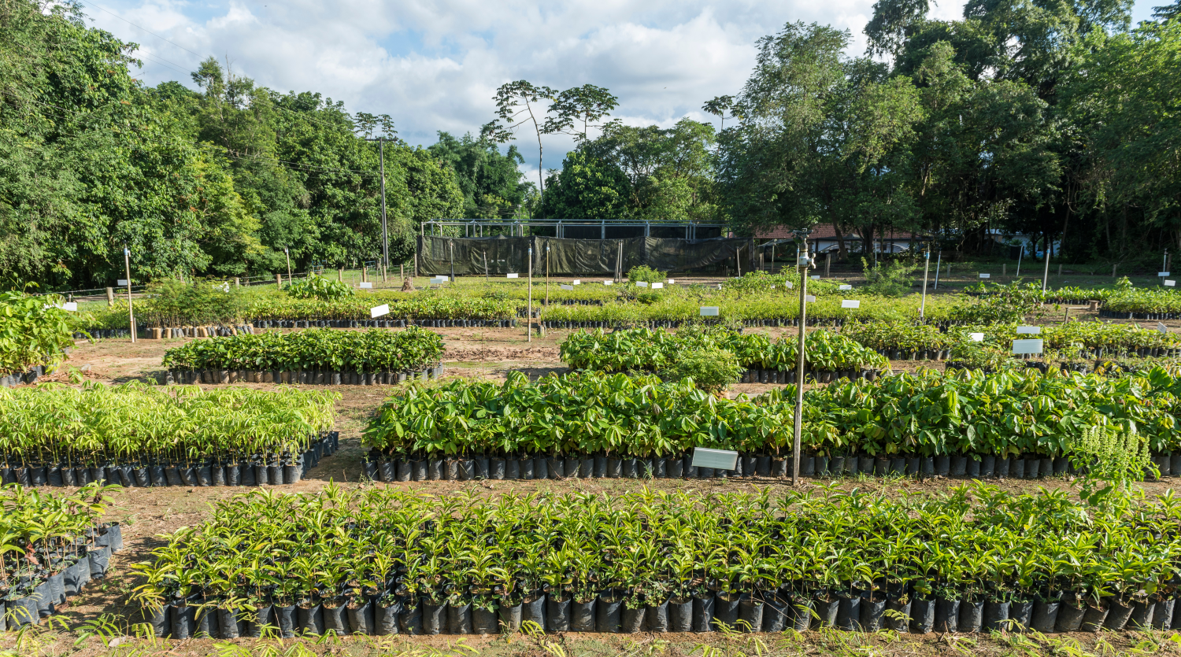
The dramatic increase in scale of ecological restoration required to meet future global targets will require enormous quantities of seed and propagule material. Tropical forests - which are often identified as priority regions for large-scale restoration - often experience substantial fragmentation and degradation, processes which may reduce the availability and genetic quality of seeds and propagules. Hence, trade-offs between cost, quantity, and genetic quality occur due to financial and logistical constraints on collection and production of plant material. Seed provenance, i.e. their ecological origin, may play a crucial role in determining the success of restoration efforts and may be directly influenced by said trade-offs. Here we examined the geographical and environmental ranges over which seeds are collected in three revegetation nurseries in tropical Australia. Our results showed that seed collections from 2012 to 2018 were overwhelmingly conducted within 10 km of the collecting nursery, concentrated in sites that were easier to access, and in areas in which the surrounding remnant forest cover was low. Additionally, seed collections were conducted predominantly in sites that were hotter than the average climate conditions surrounding the nurseries, and that – at the species level – seed collection locations frequently represented the hotter end of a species thermal range. We discuss these results in light of their effects on restoration stocks, particularly how biases in seed collection may influence the composition of species included in restoration as well as the resulting seedling genetic and phenotypic range. How such biases have affected restoration outcomes, however, remains poorly understood.
-
Australia has proposed a legislated market for biodiversity based on an existing carbon credits scheme which generates Australian carbon credit units (ACCU) from land-based projects. This provides a unique opportunity to assess the potential for markets to benefit biodiversity. We assessed the extent to which projects under the ACCU scheme overlap potential threatened species habitat, compared that to overlap afforded by protected areas, and compared the ability of different project types to deliver potential benefits to species most impacted by habitat loss. Projects are primarily located in low-cost, marginal arid lands, a pattern that reflects that of the protected area estate. Projects are smaller and fewer in number in more productive lands close to human populations. These lands also overlap most threatened species habitat, hence those species most in need of habitat restoration are the least likely to have their habitat restored under the ACCU scheme. Projects, however, do overlap the geographic range of 32% of the 1,660 threatened species assessed, including for 275 species with <17% of their range in protected areas. Biodiversity markets must incentivize actions in areas of high biodiversity value underpinned by regulations that align with national priorities for biodiversity conservation.
-
Australia is a world leader in habitat loss and species extinction, and for many species, ecological restoration will be necessary for continued persistence. Between 2014 and 2018, the Australian federal government allocated a substantial portion of funding for threatened species recovery to a nation-wide ecological restoration program called ‘20 Million Trees Land-care Program’, which included a competitive grant round. By comparing successful and unsuccessful grant applications, we were able to identify factors associated with restoration funding allocation. We then assessed the Program’s ability to provide benefits to threatened species by analyzing the overlap between restoration projects and threatened species habitat. We found that funding allocation under the 20 Million Trees Program was primarily driven by ‘value for money’ factors, specifically ‘cost per tree’ and number of trees planted. Additionally, projects were more likely to be funded if they mentioned threatened species in the description, but less likely to be funded if they actually overlapped with areas of high threatened species richness. Of the 1960 threatened species assessed, we found that only 9 received funding for restoration projects covering more than 1% of their range. Conversely, we found that utilizing alternative project selection schemes, such as alternative ‘value for money’ metrics or spatial planning methods, could have delivered better outcomes for some of the threatened species most impacted by habitat loss. Our results show that inopportune selection criteria for awarding of funding for ecological restoration can significantly reduce the benefits delivered by programs.
-
The planting and attempted restoration of tropical forest landscapes is increasing rapidly across the globe. Two limiting aspects of large-scale forest restoration are the demand for appropriate quantities of seeds and seedlings of native species, and the ability to facilitate succession in planted sites. Species functional traits such as seed type, tree size, germination time, and wood density may influence the quantity of seedlings that can be produced for restoration, and the potential of these seedlings to persist and facilitate site succession. Therefore, it is important to understand the species composition and functional trait representation of restoration plantings. We explored the species composition and functional trait representation of 846 restoration plantings in the Australian Wet Tropics containing > 465,000 seedlings from 599 species, using seedling supply records from six nurseries over a six year period (2012–2017). Despite restoration plantings in the Australian Wet Tropics containing an impressive number of species, just 52 species contributed over half of all individual seedlings. We found that species with small animal-dispersed seeds and low wood density were more abundant, on average, and had greater representation in restoration plantings than in mature rainforest. Despite this, we did not find evidence that restoration plantings had a diminished capacity to grow tall or sequester carbon as there was no significant difference in the relative abundance of tall tree species or species with high wood density. Small seeded and fast growing species may be cheaper to produce in nurseries and may accelerate site succession as these characteristics are associated with pioneer and early successional species, however these traits are also associated with higher mortality rates. Understanding how functional trait representation influences the success of restoration plantings will require further insight into temporal aspects of site succession.